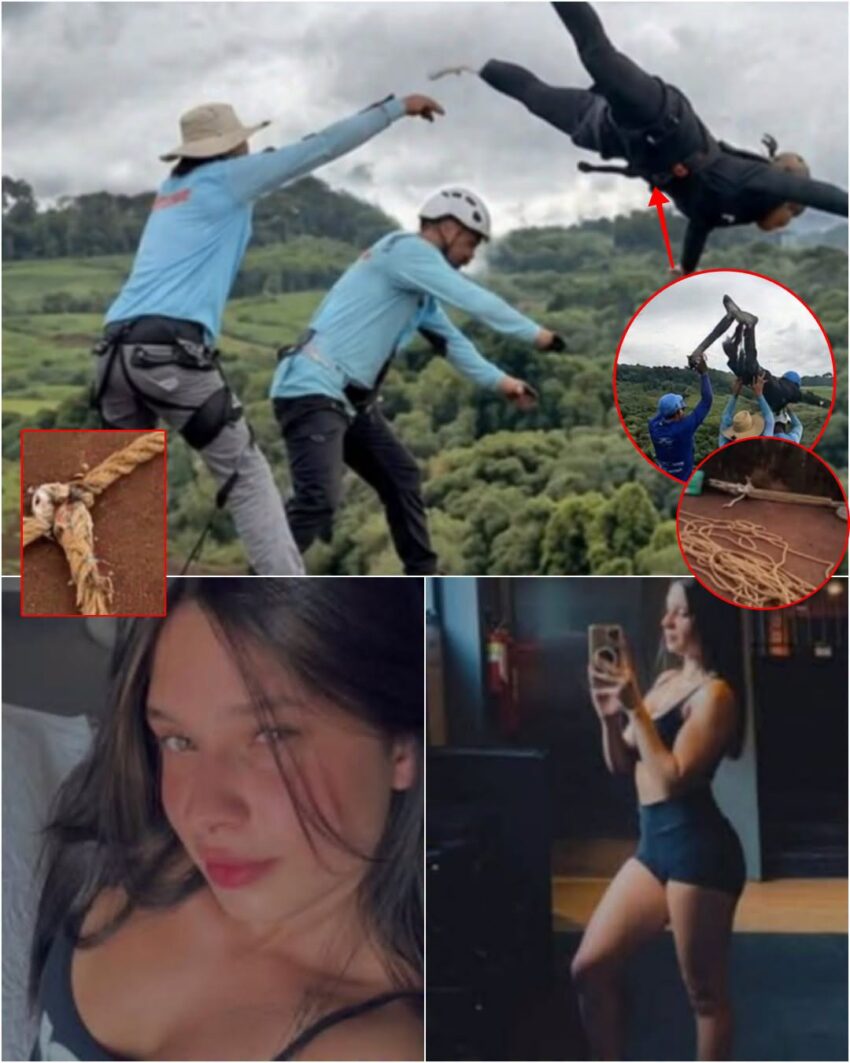
LIMEIRA, BRAZIL — A controversial extreme sports tragedy is reigniting global debate over unregulated rope jumping after a 21-year-old student died in a case authorities are calling entirely preventable.
The incident occurred at a location locals now call the “Skeleton Bridge,” already infamous for previous fatal jumps linked to illegal thrill-seeking operations.
Authorities identified the victim as Maria Eduarda, a university student whose final moments have now become central to a criminal investigation.
What began as another adrenaline-fueled descent quickly turned into the third recorded fatality at the same bridge within a short span of time.
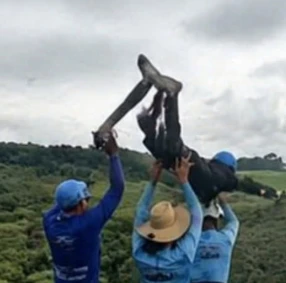
Investigators say Maria was participating in an unauthorized rope jumping activity operated outside any safety regulation or official oversight.
The site had previously been flagged and informally banned following two earlier deaths, yet the activity continued in secrecy.
According to early findings, organizers allegedly continued to run the jumps despite repeated warnings from local authorities.
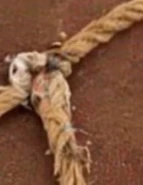
On the day of the incident, Maria was attached to a rope system that investigators now describe as dangerously compromised.
Witness statements suggest that operators failed to secure her personal safety cord while ensuring their own equipment was properly fastened.
This alleged negligence led to a catastrophic fall from approximately 40 meters above a rocky riverbed.
Emergency responders were called to the scene shortly after the impact was reported by witnesses nearby.
An off-duty nurse who arrived first provided crucial testimony about Maria’s condition immediately after the fall.
The nurse stated that Maria was still breathing and showed signs of consciousness when she reached the ground.
In a chilling detail that has intensified public reaction, Maria reportedly spoke briefly after the impact before losing consciousness again.
Despite rapid emergency response efforts, she later succumbed to her injuries at the scene or shortly thereafter.
Her final moments have become a focal point in a growing legal and public safety controversy in Brazil.
Maria’s mother delivered an emotional statement that has circulated widely in local and international news coverage.
She said, “That damned rope took you from me forever,” reflecting grief and anger toward the operators involved.
Law enforcement officials confirmed that three men connected to the rope jumping operation are now facing homicide charges.
Authorities allege that the group continued to operate the extreme sports setup despite clear evidence of prior fatalities.

The “Skeleton Bridge” has now become a symbol of the dangers associated with unregulated extreme sports tourism.
Local residents claim the area has long attracted thrill-seekers despite repeated attempts to restrict access.
Investigators are now examining whether financial profit motivated the continuation of the illegal jumping operations.
Officials are also reviewing how safety protocols were bypassed and whether equipment tampering played a role in the incident.
The case has sparked nationwide debate in Brazil over the regulation of extreme sports and adventure tourism.
Search trends including “rope jumping accident Brazil,” “Skeleton Bridge tragedy,” and “illegal bungee deaths” have surged online.
Public safety experts argue that unregulated adrenaline activities pose escalating risks when commercial operators ignore standards.
Others suggest that participants knowingly assume risk, raising difficult questions about personal responsibility versus legal accountability.
In Limeira, the tragedy has deeply affected both the local community and the university where Maria studied.
Friends described her as a determined student with a passion for adventure and outdoor experiences.
However, those close to her say she was unaware of the full history of incidents at the bridge.
Authorities believe the operation had been advertising informal jumps through private channels and word-of-mouth networks.
The lack of formal oversight made it difficult for police to track ongoing illegal activity at the site.
Officials have confirmed that previous bans were not enforced with physical barriers or continuous surveillance.
This gap in enforcement allowed operators to return repeatedly, despite growing concerns over public safety.
The investigation has now expanded to include potential charges of negligent homicide and illegal commercial operation.
Prosecutors are reviewing communications between the accused individuals and participants prior to the jump.
Digital evidence, including messages and videos, is expected to play a major role in the upcoming trial.
Emergency responders emphasized that the terrain beneath the bridge made survival extremely unlikely in high-impact falls.
Rocks and uneven surfaces reportedly intensified the severity of injuries sustained during the descent.
Medical experts consulted by investigators noted that survival after a 40-meter uncontrolled fall is rare.
Despite this, the nurse’s testimony that Maria was briefly conscious has added emotional weight to the case.
That detail has fueled public outrage and renewed scrutiny of how such operations continue unchecked.
Human rights and safety advocates are now calling for stricter national laws governing extreme recreational activities.
Some lawmakers in Brazil are reportedly considering emergency proposals to regulate or fully ban rope jumping operations.
Tourism officials, however, warn that outright bans may push the activity further underground without improving safety.
The debate has highlighted a long-standing tension between adventure tourism and public safety enforcement in the region.
Local authorities in Limeira have promised a full review of enforcement failures surrounding the Skeleton Bridge site.
Police have also increased patrols in surrounding areas to prevent further unauthorized jumps.
Community leaders are demanding accountability not only from operators but also from regulatory agencies.
They argue that repeated warnings should have triggered stronger intervention before the third fatal incident occurred.
The case has also drawn attention from international extreme sports communities following similar past accidents globally.
Experts say rope-based extreme activities require strict engineering standards, trained supervision, and certified equipment.
Without these safeguards, they warn, the risk of catastrophic failure increases dramatically with each jump.
Maria’s death has become a central example in discussions about preventable fatalities in adventure sports.
Her story is now being shared widely as authorities attempt to understand how the system failed so severely.
Investigators continue to reconstruct the sequence of events leading up to the fatal jump at the bridge.
Each detail uncovered has added complexity to what officials describe as a preventable and avoidable tragedy.
Witness accounts remain critical as prosecutors build their case against the three accused operators.
Court proceedings are expected to examine both criminal negligence and the deliberate continuation of illegal activity.
Public reaction in Brazil remains intense, with growing demands for justice and reform.
Many are questioning how many warnings are needed before dangerous operations are permanently shut down.
The emotional impact on Maria’s family continues to resonate deeply across local and national communities.
Her mother’s words have become a painful reminder of the human cost behind extreme thrill-seeking culture.
As the investigation progresses, authorities face mounting pressure to ensure that no similar incident occurs again.

The Skeleton Bridge now stands as both a physical location and a symbol of regulatory failure.
Maria Eduarda’s final jump has transformed into a national conversation about risk, responsibility, and enforcement.
Whether Brazil moves toward a full ban or stricter regulation remains a question now facing lawmakers and society alike.
For now, the case continues to unfold, leaving behind grief, unanswered questions, and a demand for accountability.
Tragic Turn for Promising Young Teacher-to-Be Leaves Community in Shock

Twenty-one-year-old Marissa Gonzalez had her whole life ahead of her.
She had just completed college, filled with excitement and ambition.
Marissa dreamed of becoming an elementary school teacher, shaping young minds in her community.
At five months pregnant, she eagerly anticipated welcoming her first child, a baby boy.
Friends and family recall her as joyful, warm-hearted, and full of promise.
Her laughter and optimism had touched everyone she met.
But fate struck on an ordinary morning that would change everything.