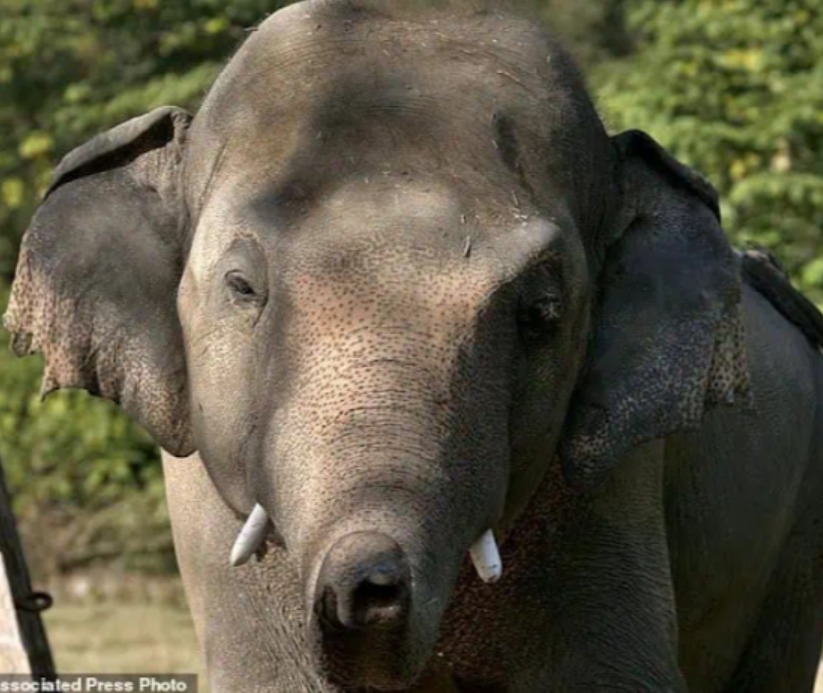
Kaavan: From Loneliness to Liberation
For decades, Kaavan the elephant was known around the world as the “loneliest elephant.” His story — one of neglect, loss, and eventual redemption — captured global attention and became a rallying cry for animal rights advocates everywhere. Now, after 35 long years of captivity in Pakistan’s Marghazar Zoo, Kaavan is finally on the brink of a new beginning. His journey from chains and solitude toward freedom and companionship has been made possible through the relentless efforts of international animal welfare organizations, compassionate individuals, and the unlikely yet powerful influence of one global superstar: Cher.

Kaavan’s life in captivity paints a heartbreaking portrait of the suffering endured by many wild animals confined in inadequate facilities. Born in Sri Lanka and gifted to Pakistan in 1985 as a diplomatic gesture, Kaavan spent nearly his entire life in Islamabad’s Marghazar Zoo. Though elephants are social creatures that thrive in herds, Kaavan’s existence was defined by isolation and confinement. For much of his adult life, he was kept in chains, with minimal space to roam and little mental stimulation. The barren enclosure offered no shade, no mud pools for bathing, and no companionship beyond that of his partner, Saheli — a female elephant who shared his enclosure for many years.
When Saheli died in 2012 from a gangrenous infection, tragedy deepened Kaavan’s already bleak world. Her body reportedly lay beside him for days before it was removed, leaving him visibly distressed and traumatized. The profound emotional bond between elephants is well documented — they mourn their dead, express grief, and even exhibit symptoms of depression. In Kaavan’s case, the loss plunged him further into despair. Witnesses described him swaying endlessly, a repetitive motion known as “weaving” that reflects severe psychological distress in captive elephants. For eight long years following Saheli’s death, Kaavan endured life utterly alone

A Global Outcry for Justice
As word of Kaavan’s suffering spread, his story resonated far beyond Pakistan’s borders. Animal welfare organizations, including Four Paws International, began campaigning tirelessly for his release. Social media amplified his plight, transforming Kaavan from a neglected zoo attraction into a global symbol of the urgent need for reform in animal captivity practices. Petitions gathered millions of signatures, and activists appealed to Pakistan’s government to intervene.
Among those who joined the campaign was Dr. Amir Khalil, a veterinarian and rescuer with Four Paws. When he first met Kaavan in 2016, he found an elephant suffering not only from malnutrition and obesity but also from deep psychological trauma. His nails were cracked and overgrown — a result of standing on hard concrete surfaces without proper foot care. His diet, consisting mostly of sugarcane and fruits high in sugar, had made him overweight yet nutritionally deficient. Dr. Khalil described Kaavan’s condition as both physically and emotionally dire.

Despite these challenges, Dr. Khalil saw hope. He and his team began advocating for improved living conditions, veterinary treatment, and eventually, Kaavan’s transfer to a sanctuary where he could live a natural, social life. The campaign gained momentum, but it was Cher’s involvement that turned the tide.
The Power of Celebrity Advocacy
Cher, the legendary singer and actress, became deeply invested in Kaavan’s welfare after learning about his story on social media. Known for her compassion toward animals, she founded the organization Free the Wild to champion Kaavan’s cause and those of other captive animals suffering around the world. Using her global platform, Cher mobilized millions of fans and leveraged media attention to pressure officials into action.
Her persistence paid off. In 2020, after years of activism and negotiation, Pakistan’s Islamabad High Court ordered the closure of the Marghazar Zoo, citing gross negligence and inhumane conditions. The ruling declared that all animals should be relocated to sanctuaries where they could receive proper care. For Kaavan, this decision marked the first real step toward freedom.
Cher’s visit to Pakistan that same year drew worldwide attention. She met with Prime Minister Imran Khan to express gratitude for his government’s cooperation and to finalize arrangements for Kaavan’s relocation. The meeting symbolized the intersection of celebrity influence and policy change — a rare moment when entertainment, politics, and compassion converged for a common cause. In a video released by the Prime Minister’s office, Cher and Khan were seen sitting outdoors, discussing Kaavan’s future. Cher later shared her excitement and relief on social media, writing that she “couldn’t stop crying” upon learning that Kaavan would finally be freed.

Preparing for a New Life
Kaavan’s rehabilitation before relocation was a meticulous and compassionate process. Under Dr. Khalil’s supervision, Kaavan was gradually transitioned from his unhealthy diet of sugarcane to a nutritious mix of fruits, vegetables, and fiber. The new regimen not only improved his overall health but also helped him lose nearly 450 kilograms (almost half a ton), an impressive transformation that prepared him for his upcoming journey. His caretakers also introduced environmental enrichment — logs, toys, and mud baths — to encourage natural behaviors and mental stimulation.
Equally important was his psychological recovery. Caretakers spent hours each day interacting with Kaavan, talking to him softly, and gaining his trust. Elephants are intelligent and emotionally perceptive animals; they recognize voices, remember faces, and respond to affection. Over time, Kaavan began responding positively to his caretakers’ presence. He learned to associate human voices with kindness rather than commands, and his once-frantic movements grew calmer.
Dr. Khalil, who had forged a deep bond with the elephant, often described their interactions as transformative. “He knows me by voice now,” the veterinarian said, emphasizing that trust was essential for ensuring Kaavan’s safe transport. This trust allowed the team to perform necessary health checks, crate training, and acclimation exercises — all vital steps for preparing an elephant for long-distance relocation.
The Journey to Freedom
Kaavan’s move was a complex and delicate operation, involving coordination between Pakistan’s wildlife authorities, Four Paws International, and Cambodia Wildlife Sanctuary — the location chosen for his new home. For safety reasons, the journey was scheduled for early morning hours to avoid heat stress. A special crate was built to accommodate Kaavan’s massive size, ensuring comfort during the flight.
As the world watched, Kaavan embarked on what would become one of the most celebrated animal transfers in history. His destination: a lush sanctuary in Cambodia, spanning thousands of acres and home to several rescued elephants, including three females. For the first time in nearly a decade, Kaavan would hear the rumble and trumpet of his own kind. Dr. Khalil expressed hope that he might even form a close bond with one of them — a chance at rediscovering the companionship he had lost so many years ago.

Cher documented the entire journey in her documentary Cher & the Loneliest Elephant, capturing the emotional farewell, the flight, and Kaavan’s first moments in freedom. The film revealed the human side of animal rescue — the dedication, exhaustion, and joy of everyone involved. Watching Kaavan step onto grass, unchained for the first time in decades, was a scene that brought millions to tears.
A Legacy of Compassion
Kaavan’s story is far more than a tale of one elephant’s rescue; it represents a turning point in the global conversation about animal welfare and captivity. His case exposed the shortcomings of outdated zoos and demonstrated the power of collective action. When individuals, organizations, and even celebrities unite for a cause, change becomes possible.
The closure of Marghazar Zoo following the court’s decision signified more than justice for Kaavan — it was a victory for all the animals who had suffered there. It also set a precedent for greater accountability in the treatment of captive wildlife in Pakistan and beyond.
Today, Kaavan’s life in Cambodia offers a glimpse of what compassionate intervention can achieve. He now roams freely, foraging, bathing, and socializing — simple joys that were once denied to him. His recovery continues under the watchful care of sanctuary staff who ensure his physical and emotional needs are met.
Cher, reflecting on the experience, described it as one of the most meaningful accomplishments of her life. “We can’t save every animal,” she said, “but saving one changes everything — for them, and for us.”
Conclusion
Kaavan’s journey from confinement to freedom is a testament to resilience, empathy, and the power of global solidarity. For 35 years, he knew little more than the concrete walls and heavy chains of captivity. Yet his story proves that even after decades of suffering, healing and hope are possible when compassion leads the way.
Through the tireless work of Dr. Amir Khalil, Four Paws International, Cher, and countless supporters around the world, Kaavan has been given a second chance at life — one filled with open skies, green fields, and the company of his own kind. His transformation reminds us that the measure of humanity lies not in what we take from the world, but in how we care for those who share it with us.