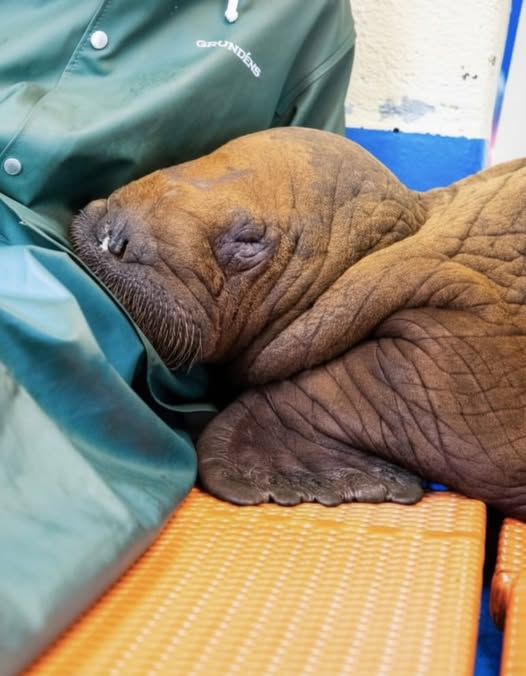
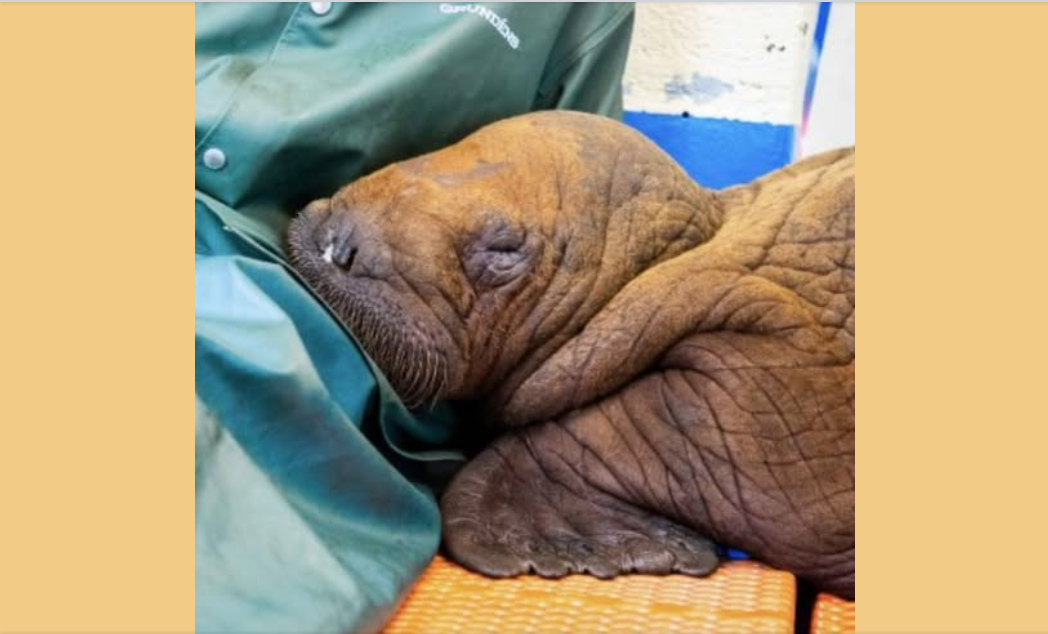
On Alaska’s remote North Slope — where icy winds sweep across the edge of the world — oil field workers made an astonishing discovery: a tiny Pacific walrus calf, alone and crying, [st.rand.ed] miles from the sea.
Pacific walruses rarely appear this far inland, and a lone calf without its mother was almost unthinkable. Knowing time was critical, the workers called wildlife authorities, who rushed the orphan to the Alaska SeaLife Center (ASLC) for emergency care.
Discover more
Entertainment center
Pet
Pets
Dog
Pups
Puppy
puppy
dog
The month-old calf was weak, [fr.igh.ten.ed], and far too young to survive alone.
ASLC staff said: Walrus calves rely entirely on their mothers for the first two years of life, Without intervention, he wouldn’t have lasted long.
Discover more
Pets
Pet
Pups
puppy
Entertainment center
Dog
Puppy
dog
When he arrived on August 1, he became one of only a handful of walruses ever treated in the center’s 25-year history. His faint cries echoed through the facility — a [he.artbre.aking] call for the mother he’d [lo.st].
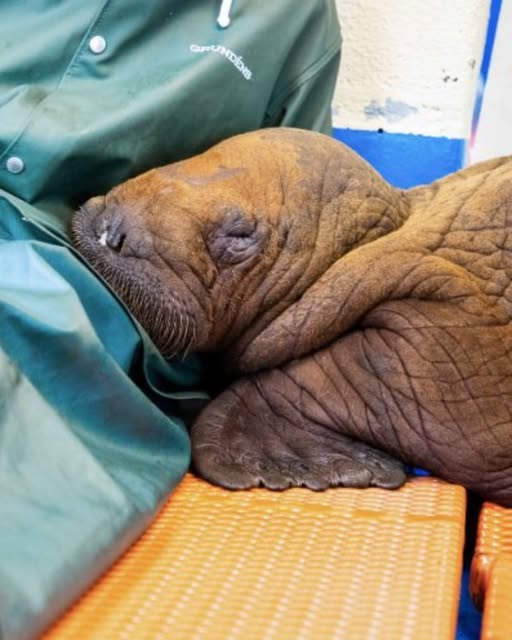
Caring for a walrus calf is unlike caring for any other marine mammal. Walruses are deeply social and tactile; in the wild, calves spend every moment pressed against their mothers for warmth and reassurance. Without that closeness, they can quickly [fade].
To replace that bond, the ASLC team created a 24-hour care plan centered on “cuddle therapy.” Caretakers take turns sitting with the calf, stroking his thick skin, whispering softly, and holding him as he falls asleep.
Discover more
Dog
Pups
Puppy
dog
puppy
Entertainment center
Pet
Pets
Jane Belovarac, ASLC’s Wildlife Response Curator said: It’s not just comfort, It’s essential to his survival. Walruses need touch — they need to feel safe.
Discover more
Pets
puppy
Entertainment center
Puppy
Dog
dog
Pet
Pups
By morning after his first night, the calf had calmed and started drinking from a bottle. Within days, his appetite grew, his eyes brightened, and his playful warbles filled the room. He began recognizing his caregivers, pressing his head against their arms and vocalizing greetings whenever they appeared.
The team introduced enrichment toys to mimic the stimulation he’d receive in the wild — balancing affection with the need to keep him from imprinting too closely on humans, in hopes he may one day return to the sea.
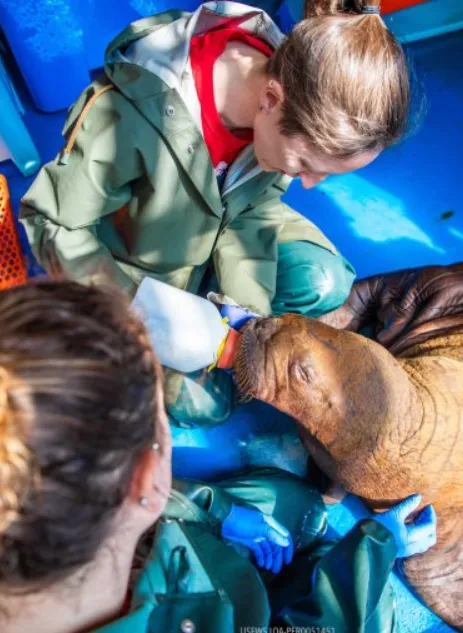
His future is still uncertain, but his progress brings hope. He’s stronger, heavier, and full of life. Photos of him nestled in blankets have captured hearts across the country, becoming symbols of compassion and care.
For the ASLC staff, he’s more than a patient — he’s a lesson.
Belovarac said: Rescue isn’t just about saving a life, It’s about understanding the emotional world of every creature we share this planet with.
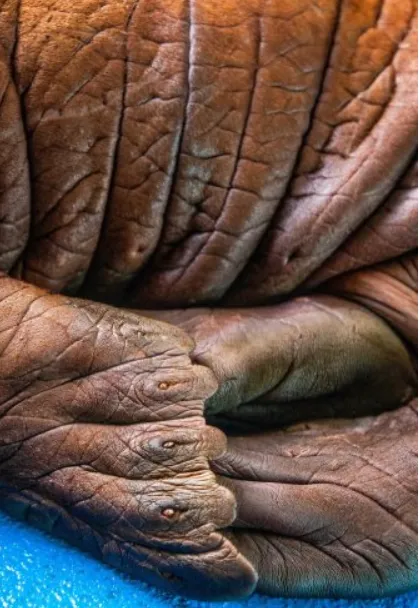
Now, as autumn approaches, the little walrus spends his days in a rhythm of feeding, resting, and gentle touch — surrounded by a human family that mirrors the warmth of his [lo.st] mother.
And in that care lies a quiet truth:
Even in the coldest corners of the world, kindness can keep life alive.