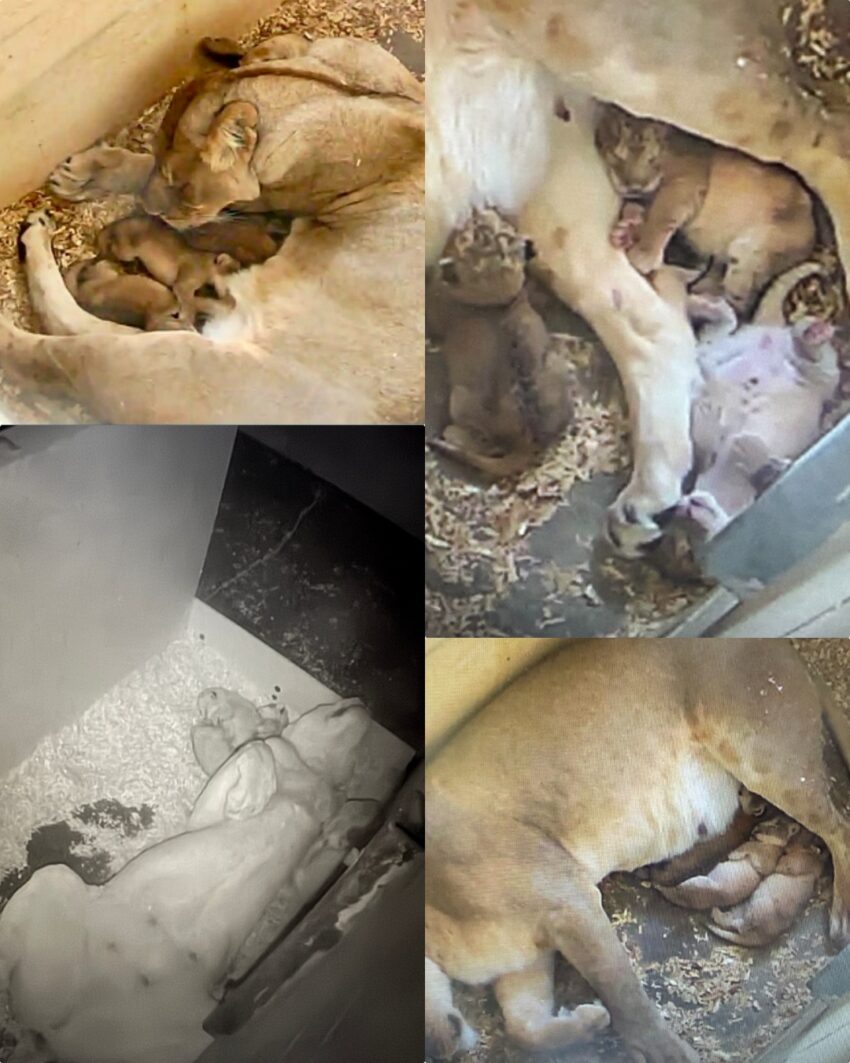
This holiday season, we have three incredible reasons to celebrate that bring joy and hope for the future. On November 23 and 24, Amirah, a 9-year-old African lioness at the Detroit Zoo, gave birth to three healthy cubs, marking a special milestone not only in her life but also in the ongoing effort to protect and preserve the African lion species.
Amirah, a first-time mother, has proven to be a calm, attentive, and nurturing parent. Despite the natural challenges of motherhood, she has adapted beautifully to her new role, showing incredible care and devotion to her little ones. The zoo staff has observed her as she spends her days in a quiet, cozy den, bonding closely with her cubs. It’s heartwarming to see such a strong maternal instinct in a first-time mother, and it gives all of us at the zoo a sense of pride and joy to witness this beautiful new chapter in Amirah’s life.

African lions are facing an alarming decline in the wild, classified as vulnerable to extinction. Several factors contribute to this, including habitat loss, dwindling prey, the spread of diseases, and human-wildlife conflict. In some regions, lions are critically endangered, and their numbers continue to decrease. These challenges make the birth of Amirah’s cubs even more significant. It’s not just a joyful occasion for the zoo but a meaningful step toward helping conserve this iconic species. Every birth like this brings a sense of hope for the future, showing that with dedication, effort, and a focus on conservation, there is still a chance to protect these magnificent creatures.

The Detroit Zoo has been at the forefront of conservation efforts for many years, and Amirah’s cubs are a part of those efforts. Through responsible breeding programs, like the one at the zoo, there is an opportunity to ensure that future generations of African lions can thrive, not just in captivity but in the wild as well. While Amirah and her cubs are in a secure, protected environment, the ultimate goal is always to contribute to the broader mission of saving wild populations of lions. The zoo’s efforts are just one part of a much larger conservation strategy aimed at protecting African lions, ensuring that they continue to be a part of our world for generations to come.
At present, Amirah and her cubs are enjoying their time in the den, where they are free to bond in peace, away from the public eye. The zoo has made the decision to allow the lion family the time they need to grow stronger and adjust to their new life. The den provides a safe, quiet space for Amirah to focus on her cubs without the distractions of outside noise or visitors. It’s a critical time for the cubs, as they are still very young and developing quickly, relying on their mother for warmth, nutrition, and guidance.

As for the rest of the pride, the zoo’s other lions, dad Kalu and aunt Asha, are also part of this journey. While Amirah and her cubs enjoy their time in the den, the other members of the pride are free to spend time in their outdoor habitat, if they choose. The dynamics of lion pride are unique, and the interactions between the lions will evolve as the cubs grow older. It’s not yet clear when the other pride members will spend time with the cubs, but it’s a process that will unfold naturally over time.
The birth of these three cubs, while a joyful occasion, was not without its sorrow. Sadly, a fourth cub, born later than the others, did not survive. This is a natural part of life for many wild species, and while the loss is heartbreaking, the zoo staff is deeply grateful that Amirah and her three surviving cubs are doing well. The loss of the fourth cub serves as a reminder of the fragility of life and the challenges that come with raising a family in the wild, but it doesn’t overshadow the positive outcome for the remaining cubs.
Looking ahead, we can’t wait to share more updates about Amirah and her cubs as they continue to grow and thrive. The cubs are still very small and are gradually becoming more active, and in a few months, we anticipate they will be visible to zoo guests. As they become more mobile and ready to explore larger spaces, visitors will have the opportunity to see them interact with their environment and begin to understand the world around them. It’s an exciting time, and the zoo staff is eager to capture and share these special moments with everyone who has supported the pride and the zoo’s conservation efforts.
May you like

The arrival of Amirah’s cubs marks the beginning of a new chapter for this incredible lion family. Their birth is a symbol of hope, resilience, and the ongoing importance of conservation work. While the challenges facing African lions in the wild are great, Amirah’s cubs represent the potential for change, a reminder that even small steps can make a significant impact when it comes to protecting endangered species.
The Detroit Zoo is committed to the long-term care and conservation of African lions, and Amirah’s cubs are a shining example of how far we’ve come in our efforts to protect these magnificent creatures. By supporting conservation programs, educating the public about wildlife preservation, and working with other institutions, the zoo continues to play an important role in the fight to save endangered species. As we celebrate the birth of these three cubs, we are reminded of the vital importance of conservation and the need to continue advocating for the protection of wildlife around the world.
We invite everyone to join us in celebrating the birth of Amirah’s cubs and to stay connected as their story unfolds. The journey of these cubs is just beginning, and there will be many more updates, photos, and milestones to share as they grow and explore their world. It’s a reminder that even in the darkest of times, there is always a reason to celebrate, and the future of African lions is something we can all be a part of.
A Dream of Walking: The Journey of a Legless Dog 1311

In a small, quiet town, there lived a dog who defied all odds, a dog whose spirit was stronger than the physical limitations of his body. His name was Lucky, and although he was born without legs, he carried a wish in his heart—a wish that one day, he would be able to walk on his own.
Lucky’s story began when he was just a tiny puppy, born in a shelter to a mother who, like him, had been abandoned. The shelter workers knew from the moment he was born that he was different. The other puppies in his litter were healthy, with all four legs, but Lucky had none. His tiny body was perfectly formed in every way except for the absence of legs.